
Tiger Woods vs Jack Nicklaus Earnings & Net Worth Compare 2026
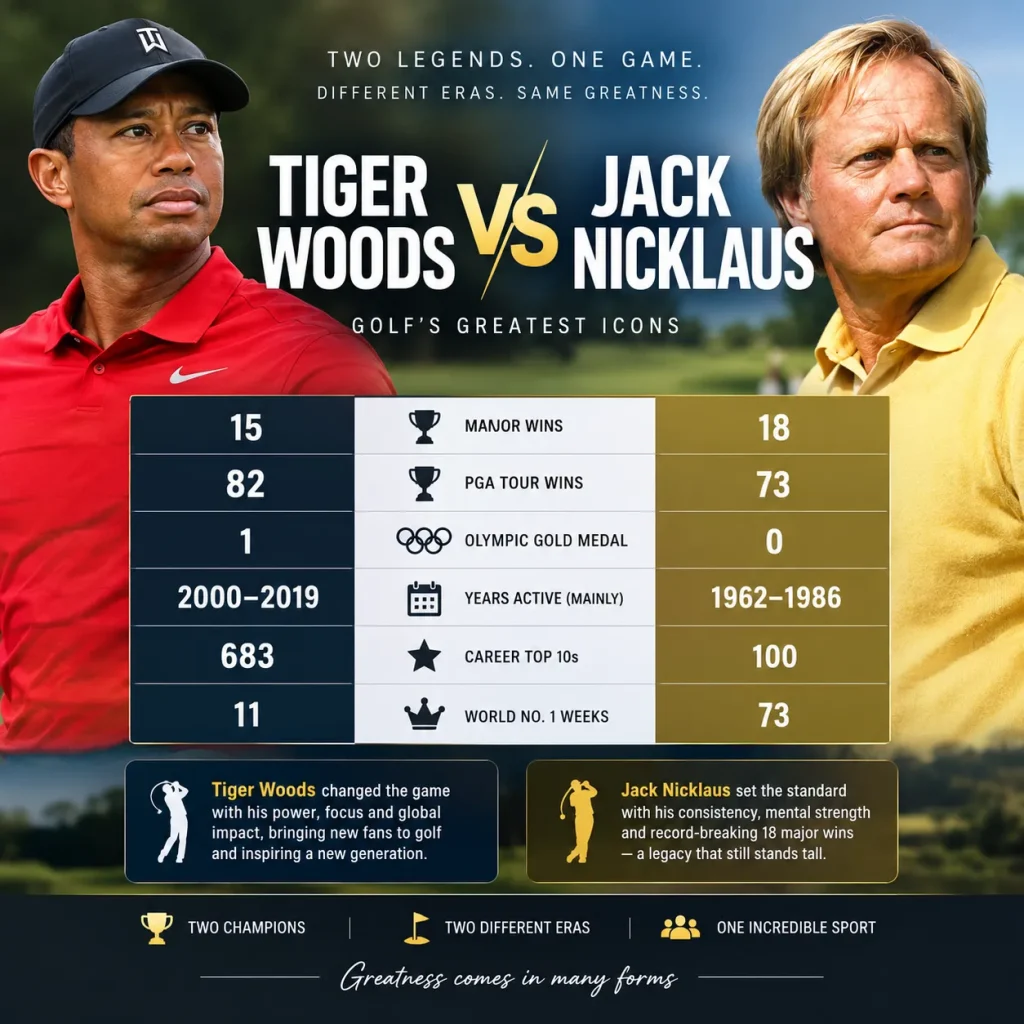
Tiger Woods and Jack Nicklaus are the two names most often raised in the “greatest golfer ever” debate. Nicklaus still leads the major-championship race with 18 victories, while Woods has collected 15 major titles. Woods has also matched the PGA Tour record with 82 career wins. When it comes to career earnings and financial success, however, Woods has built a much larger fortune. Publicly reported estimates put his net worth at roughly $1.3 billion to $1.5 billion, while Nicklaus is most often listed at around $400 million.
Those numbers are estimates, and the gap says as much about the eras they played in as about the golfers. This article compares (Tiger Woods vs Jack Nicklaus) the two on titles, prize money, endorsements, business ventures and estimated wealth, and explains why the figures differ so much from source to source.
The Short Answer
If you want the quick comparison, here it is:
Titles favor Nicklaus slightly on majors and Woods slightly on total wins. Money favors Woods by a wide margin. Neither number tells the whole story, so the sections below look at where each fortune came from.
How Their Careers Compare
Nicklaus: Longevity and Major Wins
Nicklaus turned professional in 1961 and won his 18 professional majors over 25 years. He also secured runner-up finishes in major championships 19 times, highlighting his remarkable consistency at golf’s biggest events. His last major came at the 1986 Masters at age 46, still one of the most celebrated wins in golf history.
His strength was sustained excellence. He contended in majors across several decades, which is part of why many fans still point to him as the standard.
Woods: Peak Dominance
Woods turned pro in 1996 and reached a level of dominance few athletes in any sport have matched. He held all four major titles at once across the 2000 and 2001 seasons, a run often called the “Tiger Slam.” He spent more weeks ranked number one in the world than any other player.
His career also includes a long comeback story. After back surgeries and a serious car accident in 2021, he won the 2019 Masters, his 15th major. More recently he has dealt with further injuries, including an Achilles rupture reported in 2025.
Prize Money Why the Comparison Is Lopsided
It’s tempting to compare prize money directly, but that comparison misleads. In Nicklaus’s prime, a winner’s check was a few tens of thousands of dollars. Purses grew enormously after television deals expanded in the 1990s, and Woods was the player most often credited with driving that growth.
That’s why Woods sits at the top of the PGA Tour career money list while Nicklaus, a winner of more majors, does not. A fairer way to compare them is by relative dominance in their own eras, not by raw dollars.
Prize money is also only a piece of the picture for both players. Most of their wealth was built away from the leaderboard.
Endorsements and Sponsorships
Woods and the Nike Partnership
Woods’s endorsement history is one of the most valuable in sports. His long partnership with Nike began in 1996, when he turned pro, and is widely reported to have been central to his fortune. The two announced they were parting ways in early 2024. He has also been linked with major sponsors across several industries over the years, though contract terms are generally not public.
After Nike, he launched Sun Day Red, a golf apparel brand, in partnership with TaylorMade. As with most private deals, the financial terms are not publicly confirmed.
Nicklaus and the “Golden Bear” Brand
Nicklaus built a smaller but durable endorsement and licensing footprint. His “Golden Bear” nickname became the foundation of a company that touches golf design, licensing and event ownership. Compared with Woods, his sponsorship earnings came from a smaller global audience, a function of the time rather than any lack of appeal.
Business Ventures
Both men turned their names into business brands, but in different ways.
Nicklaus’s main ventures
Woods’s main ventures
Net Worth: What the Estimates Say
Based on publicly available information, most golf and sports-wealth outlets in 2026 place Woods between $1.3 billion and $1.5 billion, with Forbes among those putting the figure near the top of that range. Nicklaus is most often listed at about $400 million, though a few lower-quality sites cite higher figures, and at least one outlet’s list of athlete wealth uses much larger numbers for both men.
So why the spread?
Net worth is also different from career earnings. Earnings describe money brought in over a career. Net worth describes what remains after expenses, taxes, debts and spending, plus the value of assets and investments. A golfer can earn a great deal and still have a lower net worth than a smaller earner who invested well. That’s why this article treats the figures as estimates, not as confirmed totals.
Why Woods’s Wealth Grew So Much Larger
Several factors explain the gap, and most have little to do with who was the better player:
Nicklaus, meanwhile, built a very large fortune by the standards of his own era, especially through course design and real estate, and largely after his peak competitive years.
So Who Is Greater?
There’s no single answer, and it depends on what you value. Supporters of Nicklaus point to 18 majors and a long record of finishing near the top. Supporters of Woods point to his peak dominance, his 82 wins, and his impact on the sport’s popularity and prize money. Many fans and analysts are comfortable calling it a split decision.
On pure finances, the answer is clearer: Woods’s estimated wealth is considerably higher. On titles, it’s closer than the money suggests.
FAQ’s About Tiger Woods vs Jack Nicklaus
Conclusion
Nicklaus has the edge in major championships, while Woods leads in total PGA Tour wins and, by a wide margin, in estimated wealth. Much of that financial gap comes from timing: bigger purses, global marketing and modern business opportunities. Because neither golfer publishes his finances, treat every net worth number here as a reasonable estimate rather than a verified total.